
Digital Death and Degradation
Manipulating the Malleability of Blackness


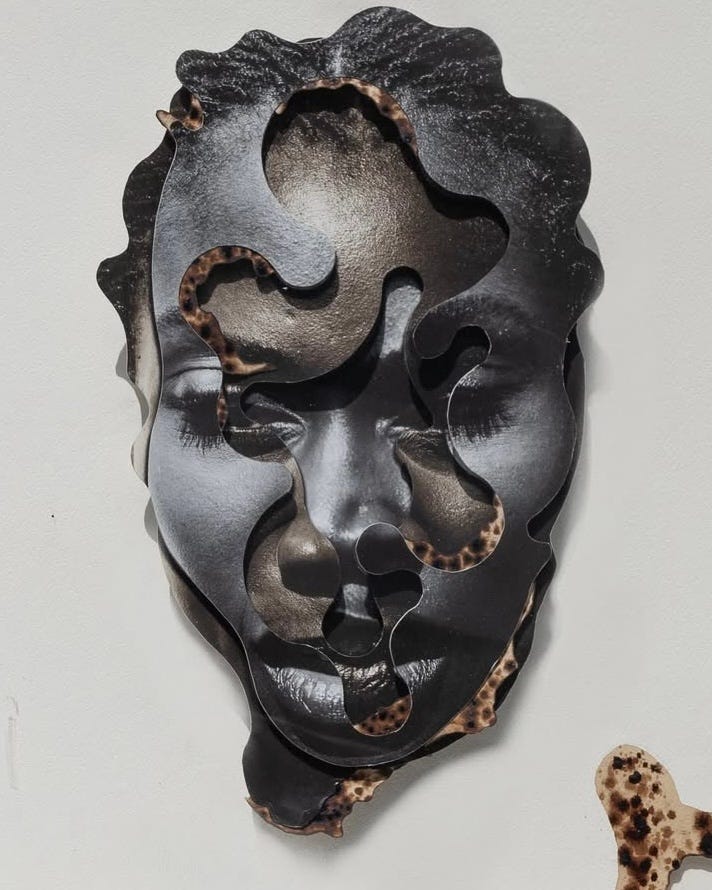
Author’s Note: At the helm of the alt-right pipeline and manosphere peddling false information, misleading susceptible and impressionable people in general, specifically manipulating and corralling gen-z white male adults and teens for their “race war” is not your typical klansman or run-of-the-mill nazi. That is to say, they are not necessarily being directly influenced by traditional white power groups and organizations like the Klu Klux Klan, racist skinheads, and the Aryan brotherhood. Instead, they are being radicalized by social media commentators, incel influencers, and political podcasters—god-awful white supremacists/nationalists like Tim Poole, Matt Walsh, Ben Shapiro, Nick Fuentes, and the recently murdered divisive debate bro—Charlie Kirk. Indeed, the ones who once led the charge on the original pathway to white superiority culture while preserving the colonial belief of “manifest destiny” and the conspiratorial “great replacement theory”, has taken a backseat to a new-age variant of right-wing thinkers, individuals, and fascists. Something we must remember is that white youths no longer have to be smiley spectators alongside their parents watching extrajudicial public executions via black lynchings like in the Jim Crow south to be introduced to far-right authoritarian politics and practices. This is because at the tip of their pale fingers with the touch of a few buttons they can now access websites and apps where they are more than likely to be subjected to countless reactionary neoliberal/conservative media, platforms, and propaganda. Death cults that yearn for their blind loyalty and membership, blogging channels that crave their undivided attention and subscription. At this very instance, you can easily find numerous white people in their formal years and onward, spending their time online harassing black people (as well as other marginalized communities) by spewing anti-black and hateful rhetoric. Whether it be in gamer chat rooms and streaming platforms, TikTok and Twitter comment sections, or somewhere in subreddit community spaces, you can be sure that their prejudice and presence is felt amongst their black peers all over the world wide web.
Introduction
Pro-athlete, fashion model, and WNBA superstar from Baltimore, Angel Reese, has been the topic of many discussions across various news outlets and mainstream media circuits since her collegiate career at Louisiana State University (LSU). Most of the noise and chatter, the unwarranted disrespect and death threats, the online harassment and hostility, the sexual edits and racial epithets, and all the harm and hate she’s received in general over the last few years, began after her team’s 2023 NCAA national championship victory over the university of Iowa (the Hawkeyes). The losing team that had popular 3-point shooting playmaker, Caitlin Clark, whose fanbase dubbed the “great white hope”—a microagressive phrase (aimed towards African Americans) often projected onto European American athletes, who are believed to have the talent and potential to beat black people in sports they mostly dominate. Nevertheless, despite Reese’s life changing success story and generational rise to fame, the six foot three forward still has had to endure some of the most inappropriate and indefensible things.
Last year in September for the debut episode of her podcast Unapologetically Angel— a platform she officially launched to gain control of her voice, formally address false narratives levied against her, and dispel certain myths surrounding her name, Reese sat down with her cousin to speak the truth and discuss several issues that were weighing heavy on her heart. Eleven minutes and 45 seconds into the conversation, she briefly spoke about being sexualized on multiple occasions stating “people have made AI pictures of me naked, they have sent it to my family members”. Although she says in a Instagram live video that her agent was able to get in contact with Twitter and have them remove the unsolicited pictures, one knows that those images are still floating throughout the ethos of social media. Having witnessed this digital fetishization and defilement take place in real time, the reactions and responses revolving around the whole ordeal was truly gut-wrenching and unsettling. One can only imagine how much of a psychological toll that was for her mentally.
Here we have a young black woman who’s never once posted nudes of herself online anywhere, but somehow, she ends up being vilified, objectified, slut-shamed, and made a mockery of mostly by unhinged white male Caitlin Clark fans and so-called sports journalists. And of course, black people (mainly women) were the only ones coming to her defense and speaking out against the non-consensual, falsified photos of her likeness. What Angel Reese has experienced is the degenerative nature of rape culture extended into the cybersphere—virtual forms of sexual violence, abuse, and coercion—the erotic acts and advances through electronics for nefarious purposes, in addition to the modifying and manipulation of blackness in the metaverse via editing software for salacious reasons. All of which, in the end, creates a disempowering warped spectacle, one that ungenders, objectifies, and strips the black body of personal functions for self gratification. What black feminist thinker Hortense Spillers calls pornotroping but instead enmeshed into the digital domain.
What unprecedented type of malleability does blackness possess that makes it always already available to be redistributed into someone’s pervasive alteration? What does it mean for the black imago to be transmuted, redesigned, digitized, and fashioned anew, our being now seen from angles that while walking this earth we never ventured to before? When rummaging through the vast contours of the libidinal economy, what happens when nonblack fantasies and desires are allowed to breach into arenas that should require permission? What does it mean for someone to have the ability to reshape and contort a body after it has been claimed by death? To reconfigure its image or being into something that completely distorts it from what it once was when it was sentient and breathing? What if the wait to alter the black body after its physical departure is now forever unnecessary because computer science and technology allows new forms to be created almost instantly? While black folks work earnestly to venerate their dead, what is implied when there is another form of recreation happening by those that love to languish in the lobby of a room illuminated by anti-blackness? Does it mean that even when breath eternally vacates the lungs of black folks we continue being the embodiment of nothing, while simultaneously becoming a new iteration of something—something that can be rewritten, “meme’d” or artificially crafted?
For Zakkiyah Iman Jackson, we were “marked as black”, which is to say that blackness was thrusted upon us (by those who thought of us as the inferior race) during the eras of African enslavement and subjectivity. She makes this apparent with her purposeful decision to use the term “black(ened)” people within her literary works as opposed to black people. A reminder and delineation to make clear that we, people of the African diaspora, weren’t necessarily born black of our own volition and free will, but rather we became black by colonial domination and decree. Likewise, Calvin Warren states that blackness is a function imposed on the flesh. This definition rejects the liberal humanist notion of those who may view blackness as a sort of cultural identity. Since blackness is an imposition on the body, there is an implication attached meaning there is a role that blackness must fulfill. Perhaps it is through black being where the interminable and incalculable come together to form something that creates a pathway for the impossible. Limits no longer pose a problem with blackness as the foundation for the fathomless. In other words, blackness is the world’s playground—it is often where the state, the non-black, and the white go to make the unimaginable a reality. To articulate and extend our analysis further, we offer a meditation on Zakkiyah Iman Jackson’s ingenious concept of “ontological plasticization” to theorize about the formlessness and fluidity of blackness, as it pertains to the material and metaphysical ways in which whites and nonblacks have maliciously utilized its malleability to their expediency. An anti-black endeavor that keeps the racial wheel of terror spinning well into the contemporary afterlife of slavery. It is through Professor Jackson’s remarkable work that we’re able to reckon with and critique anti-blackness as it emerges inside the technologically advanced realm of digital media and AI.
The Techno-Fascist Forecast
In the 21st century age of AI, artificial intelligence has become a computerized blight on both the natural climate and the black population, especially in the southern regions of the United States. In Christina Sharpe’s In The Wake: On Blackness and Being she states how weather is “the totality of our environments; the weather is the total climate; and that climate is antiblack.” With this revelation and understanding, it explains why the air pollution in Memphis, Tennessee, caused by techno-fascist Elon Musk and his gentrifying data center (which also has an extremely high water usage that consumes up to one million gallons every 24 hours), exemplifies how anti-blackness permeates every aspect of black existence. According to Truthout’s article Big Tech Data Centers Compound Decades of Environmental Racism in the South and More Perfect Union’s video We Went to the Town Elon Musk Is Poisoning, local residents speak of how the air that once invigorated them when they opened their windows in the morning is now tainted with the smell of the 33 (there are a total of 35) gas turbines that are powering the supercomputer, Colosses. The pungent stench of ecological catastrophe is toxic and impure to the black people who are experiencing higher rates of asthma.
It is like Christina suggested, the weather is anti-black and when it enters the lungs like the emissions from the data center have entered this community, it has the potential to be fatal. It claimed Alexis Humphrey’s grandfather who suffered from COPD (chronic obstructive pulmonary disease). This is a respiratory illness that develops in a person that smokes cigarettes—Alexis’ grandfather did not smoke cigarettes. Nonetheless, the poisonous aroma, which is indicative of the county’s blatant disregard for black social life, can awaken you in the middle of the night the same way it did Alexis, immediate caution being taken since she feared that gas was seeping into the house while she lay resting. Her neighbor, Easter Knox, says the odor of this totalizing killer makes it feel like “your whole world is collapsing down on you”, feels like “you’re fixin’ to die.” Those who benefit from this airborne attack don’t even have enough of a backbone to look the folks in the face that they’re harming. They recite a script approved by their morally bankrupt boss at a town hall meeting while lying outright or by omission saying that they have the community’s best interests at heart. Memphis citizens inhale a polluted atmosphere on the daily while government officials and elected representatives turn a blind eye the way the world has always done when black livelihood is in peril.
Natural gas, in this case, is a sidekick, a slow, silent killer that encircles black Tennesseans. It is transparent in the way it exacerbates the suffering of those that are immunocompromised, it is heard in the greedy rumble of the turbines a few miles away, it is in the Casper-like essence of the permits and licenses Musk didn’t need in order to evade due process because he was allowed to do as he pleased—the bodies of black folk be damned. The “F” that Memphis received from the American Lung Association for ozone pollution stands not only for ‘failed’ but also ‘fuck you’. Elon and all xAI associates sing this expletive in perfect harmony to the black community they never once considered when they laid the center’s first brick. The weather is anti-black and AI does not hesitate when enforcing this forecast.
Anti-black Cyberbullying
Reality TV show Love Island has made the streaming platform, Peacock, a house hold name. While Netflix, Amazon Prime, and Disney+ maintain their dominance as the top three subscriber-based entities, the success of the dating show has undoubtedly caused commotion on social media timelines everywhere. After the success of Love Island USA Season 6, show runners continued to cast confident and stunning dark-skinned black women. This has guaranteed viewership from the black audience (a must-have for any platform that wants to trend), but it also has led to a continuation of misogynoir and mistreatment. Those accused of allowing or perpetrating this type of harmful behavior have attempted to atone and apologize for their actions, however these underwhelming endeavors never bring about any genuine, material resolutions since they never get to the root of the problem at hand. Living in the wake of slavery has set a precedent for black bodies wherever they are, no matter how attractive or alluring they may be to a white/non-black audience. Ultimately, black flesh being a site of experimentation and extraction allows viewers and producers to consciously or unconsciously craft any narrative and image they want for the black women simply hoping to find love in the villa. Season 7 contestants Olandria Carthen and Chelley Bissainthe would spend a summer not only in the sun, but also as vessels for anti-black cyber bullying.
Olandria and Chelley at various moments inside the villa were expected to either respond in a certain manner that made everyone else comfortable and/or provide some form of emotional labor. For example, Chelley setting a boundary after feeling disrespected by Huda, a Palestinian woman, after the events of the heart rate challenge led to Chelley being deemed a mean girl. This black woman essentially saying ‘I am not in the headspace to have this conversation, can we do this later?’ went against one of the core functions of blackness—being always available to cater to the needs of white/non-black people. Chelley wanting a moment to process and regulate her emotions, something anyone should have the agency to do, immediately was read as dismissal. In other words, how dare Chelley “disregard” how Huda feels in this moment when she’s clearly apologetic.
Furthermore, when Huda is not granted the forgiveness she expected from Chelley, she then turns to the next black woman for emotional support—Olandria. At the kitchen bar, Huda seeks counsel by asking Olandria is she “a terrible person” referencing what occurred during the heart rate challenge since Huda proclaimed it was not that bad. Olandria defies the expectation to absolve Huda of her misstep by responding candidly saying “I don’t think you’re a terrible person, but it was a little much” (which majority of islanders agreed that it was) then excuses herself. Huda being left emotionally unsupported and physically unattended to incites another onslaught of classic “white woman tears”. Huda crying is then a catalyst for the producers and the non-black/white audience to spin and support a narrative that casts Huda as a victim and the two black women as the irrational antagonists.
These events also underscore what Hortense Spiller’s identifies in her text Mama’s Baby, Papa’s Maybe: An American Grammar Book when she states “the procedure adopted for the captive flesh demarcates a total objectification, as the entire captive community becomes a living laboratory.” In other words, this describes the experimentation and extraction aspect of blackness. Love Island USA benefited greatly from Chelley and Olandria’s physical appearance which is evident by the numerous tweets, posts, and reaction videos that harped on how unbelievably gorgeous these two black women are. The producers caught their best angles, highlighted their best features in close up or slo-mo shots, putting them on display for the audience to marvel at these black beauties. Everyone takes something from these black women without a second thought, but black extraction unfortunately comes with a grotesque form of experimentation that goes beyond just painting the stereotypical mean-girl or angry black woman narratives.
What happens when crafting tales that supports or expands these cliches is no longer sufficient for the viewer that wishes to violate these black women beyond rude words and comments? How does one cross over or rather, violate the physical boundaries that may exist between them and the black(ened) subject? The following examples reveal how technology and the spectator’s imagination allows them to 1) insinuate an implied infliction of pain through photoshopped images, 2) transform the black into an object of their choosing that acts as a placeholder for abuse, and 3) remake and revive black suffering through digital alteration. These malign mechanisms are “underwritten by a shadow history of experiments with blackness”. This supports Professor Jackson’s theory that blackness is a form that is “infinitely malleable.” Since blackness is able to be molded in malicious ways, the forms it may take or be subjected to will inevitably intensify with each experiment on its likeness.
The popular blog Buzzfeed received backlash for an intended “cheeky” joke directed at Chelley in a post where the prompt was what would they serve the islanders for breakfast. While all other Season 7 contestants featured in the Instagram carousel received various edible breakfast meals, Chelley was the only one to receive a knuckle sandwich. A stock image of a white fist photoshopped between two pieces of white bread is shown beside her photo. The platform stated in their apology that serving Chelley a knuckle sandwich “missed the mark” based on how it landed with “racial undertones” rather than humor. It’s important to examine that throughout the process of this post being made not a single person seemed to pause at what the imagery of a white fist directed at a black woman signified. What Buzzfeed deemed a mistake ironically speaks to how not only is violence against black folks foundational to our society, but it’s so common that gendered oppression also can be easily interpreted as comedic. Something harmful is somehow synonymous with being humorous. Historical context of whiteness being wielded as a weapon to dominate blackness is merely a forgotten footnote. While the fist in this context caused no bodily harm to Chelley, psychological harm was done which is evident in a post she uploaded on her story addressing the crude quip. The inferred message in Buzzfeed’s post was explicit: you deserve to be met with brute force first before anything. This form of experimentation outlines how one can inflict pain virtually when being physically present is not an option.
In another instance, Asian content creator Adelaine Morin uploaded a TikTok video to her 1 million followers where she labels the black punching bag hanging between her and her friend as Olandria and Chelley. After declaring this, Morin and her friend then proceed to throw simultaneous jabs at the bag in fits of laughter. These two black women thousands of miles away from the influencer are unaware that they have been transformed into a canister for cruelty to be emptied into. The heavy bag now bears their likeness via name for these two non-black people to rain down punches on. Adelaine decides that the physical border between her and these black women is seemingly trivial as her fantasy of harm can be conducted through other means by having this inanimate object take their place. As always, after being called out for this type of behavior, Adelaine then decides to post an apology on her story in which she absolves herself of her actions by claiming that the video was just a “joke” and she’s “sorry to anyone she offended”, therefore making Chelley and Olandria’s forgiveness unnecessary. She states that when the black women “ganged up on Huda” it caused her to get “a little too into the drama” and she “definitely didn’t intend to incite any kind of violence or negativity.” Once again, with no hesitation, violence disguised as humor is projected onto the black, but this time by recasting them as objects designed to absorb punches. The concern and apology is for anyone that may have been offended, but not directed at the people who the joke was intended for. This also suggests that the boldness and joy on display in the TikTok video would have vanished if Chelley and Olandria were actually in the room. The black not being physically present seems to provide a sense of comfort for non-blacks and whites to engage in something they would arguably not do otherwise. This accentuates what Zakkiyah discusses in Black Feminism At The End of the World about “anti-blackness as a matrix of possibility” meaning “it is both a condition of possibility for certain kinds of logics, behaviors, and economies of feeling and value...”. This creator’s form of experimentation highlights how blackness can be invoked, dispelled, and the cause all at once.
In another attempt to torment Olandria, X (Twitter) user and now banned account @girltheboycotts, posted an edit of George Floyd’s final moments, but with a deranged twist. The edit showcases the face of Olandria now in George’s place on the ground with the killer cop Derek Chauvin’s face swapped with Huda’s. The force of the knee pressed upon the neck now belongs to the popular Arab contestant and the pain of a deceased black man has now been reconfigured and transposed onto a living black woman. Here, black suffering is revisited for Floyd’s family and black folks around the world who witnessed and live in the wake of his untimely murder. This remake exemplifies how the affliction of black folks is never left in the past, nor will it remain undefiled by those that wish to utilize this “meme” as a weapon. Our blackness is something that can always be repurposed for other’s negrophilic pleasures, obsessions, and enjoyment. Indeed, our shared blackened state and the agony that arises from its racialization binds us together while simultaneously revitalizing society with our misery since this is custom for our captors. It is apparent that if the impossible can be done, it is then made possible through running tests on black flesh. The wounds from the whip are now reopened in the contemporary with technological lashes of torture that penetrate and reverberate in a virtual matrix that leaves no inch of black being unscathed. There is no regard nor any respect for the black even in death and decay.
 | A guest post by
|
Most definitely!
Thank you